Vintage World Map Watercolor: A Designer's Guide to This Artistic Asset
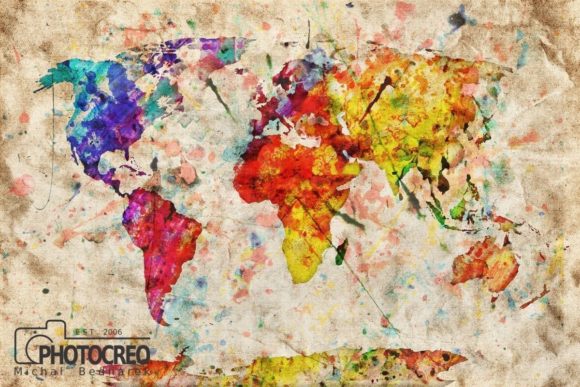
There’s a certain magic to old maps. They don’t just show geography; they whisper stories of exploration, forgotten empires, and the vastness of the world. Now, imagine capturing that sense of history and wonder, but with the vibrant, fluid energy of a watercolor painting. That’s the essence of the Vintage World Map Watercolor. It’s not just a graphic; it’s a piece of art rendered in a retro style on a textured, grunge paper background. This digital asset offers a beautiful blend of nostalgia and artistic flair, making it a versatile tool for creators who want to add depth and character to their projects.
The visual personality of this piece is unmistakable. You get the familiar, comforting outlines of the continents, but they’re brought to life with the unpredictable bleed and saturation of watercolor pigments. Colors might be soft earth tones or more vibrant hues, all with that characteristic hand-painted feel. The underlying grunge paper texture adds another layer of authenticity, preventing it from looking like a sterile digital reproduction. It feels aged, tactile, and real. This isn't a clean, modern vector map; it's a design asset with a soul, perfect for projects that need to evoke emotion, history, or a handcrafted sensibility.
Where This Map Truly Shines: Practical Applications
Understanding the asset's personality is the first step. The next is knowing where to deploy it for maximum impact. Its strength lies in projects where storytelling and aesthetic appeal are just as important as information. Think of it as a background that sets a scene or a focal point that sparks curiosity.
For printable projects, the applications are vast. It makes for stunning wall art in a home office, study, or travel-themed room. Printed as a poster, it becomes an instant conversation starter. You could also use it as a unique background for event flyers, especially for history talks, travel expos, or vintage-themed markets. The texture and style mean it holds its own even at larger scales, provided the resolution is sufficient for the print size. For digital design, it’s equally at home. Use it as a website hero background for a travel blog, an expedition company, or a boutique hotel to instantly establish a mood of adventure and sophistication. In social media graphics, it can serve as a rich, textured backdrop for quotes, announcements, or brand storytelling that needs to stand out in a crowded feed.
Making It Work: Pairing and Readability
A powerful design asset requires thoughtful integration. The key to using the Vintage World Map Watercolor effectively is to treat it as a foundational element that other design choices build upon. Its detailed, textured nature means it will influence your typography and layout decisions significantly.
Font pairing is critical here. Because the map is artistic and has a lot of visual texture, you generally want to pair it with cleaner, more structured typefaces. A classic serif font like Playfair Display or Lora for headlines can complement its traditional feel while remaining highly legible. For body text, a simple, clean sans serif font like Open Sans or Lato provides excellent contrast and ensures readability against the busy background. Avoid pairing it with overly ornate script fonts or complex handwritten fonts, as this can create visual chaos and make text impossible to read. The goal is a harmonious balance where the art supports the message, not competes with it.
This asset can profoundly influence visual hierarchy and brand perception. Using it as a background immediately positions a brand as thoughtful, adventurous, or connected to history and culture. It can make a startup look established or give a creative project a layer of curated artistry. However, consistency is key. If you use this map style in your logo design or primary brand identity materials, ensure its usage is consistent across all touchpoints—from your website to your packaging design—to build strong recognition. For editorial design, like in a magazine feature about historical voyages, it can be a breathtaking full-bleed image that sets the entire tone of the article.
A Practical Checklist for Implementation
Before you dive in, a little due diligence goes a long way. Here’s a practical guide to evaluating and using this asset:
- Evaluate the Project Fit: Ask yourself if your project’s tone aligns with the asset’s vintage, artistic vibe. It’s perfect for travel, history, education, boutique branding, and creative personal projects. It might be less suitable for ultra-modern tech companies or minimalist financial services.
- Test File Formats and Resolution: The asset is provided as a JPEG at 72 DPI. This is ideal for web design and social media graphics where fast loading is essential. For print design, you must verify if a higher-resolution version (300 DPI) is available or if the provided file can be scaled without significant quality loss for your intended print size. Always check the licensing for your specific use case, whether personal or commercial.
- Review and Refine: Don’t just drop it in and walk away. Test your chosen font pairings directly on the background. Add semi-transparent overlays or solid color panels behind text blocks to improve legibility if needed. Sometimes, cropping into a particularly beautiful section of the map can yield a more focused and effective background.
- Consider the Color Palette: Pull colors from the watercolor itself to create a cohesive brand identity or design palette. Using the muted blues, greens, and earth tones from the map in your buttons, headlines, and accents will create a seamless, professional look.
The Vintage World Map Watercolor is more than just a design asset; it’s a starting point for a narrative. By understanding its strengths—its emotional appeal, its textured artistry, and its retro charm—and by applying practical design principles around typography and layout, you can leverage it to create work that is not only beautiful but also deeply engaging. It’s a resource for the designer, marketer, or creator who values substance and story as much as style.