Herbalist Common Plants Watercolor Clipart: A Designer's Guide
Unpacking the Visual Character of the Set
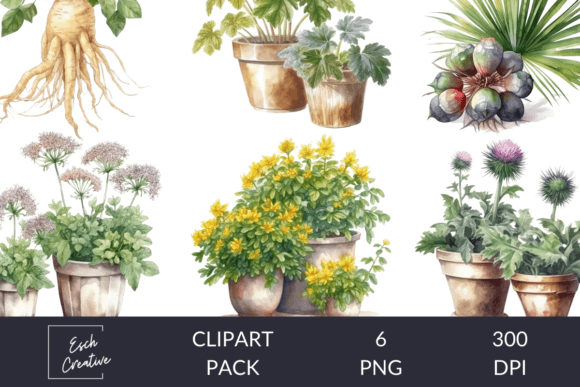
The first thing you notice about the Herbalist Common Plants Watercolor Vol 2 set is its authentic, organic texture. This isn’t a sterile digital illustration; it carries the unpredictable bleed of watercolor pigment and the subtle grain of cold-pressed paper. The set features six distinct botanical subjects: Ginseng, Goldenseal, Milk Thistle, Saint John's Wort, Saw Palmetto, and Valerian. Each piece possesses a personality that feels both scientific and artistic, striking a balance that is often difficult to find in stock design assets.
From a design perspective, the aesthetic is gentle but complex. The transparency of the watercolor washes allows these assets to blend seamlessly into various backgrounds without looking "pasted on." For designers working with modern typography, specifically sans serif or clean serif fonts, these illustrations provide a necessary textural counterpoint. They soften the hard edges of geometric typefaces, adding a layer of warmth that resonates with audiences looking for authenticity. Whether you are building a brand identity for an organic skincare line or laying out an editorial piece on natural wellness, the visual weight of these plants is substantial enough to anchor a design without overwhelming the layout.
Practical Applications for Digital and Physical Products
The versatility of the Herbalist Common Plants Watercolor Vol 2 collection lies in its technical specifications. As high-resolution PNGs at 300 DPI and 2700px by 2700px, these files are ready for heavy-duty print work. You don’t need to worry about pixelation when scaling them for posters or large packaging design. This makes them a reliable choice for small business owners who need to bridge the gap between their web presence and physical merchandise.
Consider the packaging design for a tea company or a wellness startup. Using these watercolor elements as background accents or focal points on labels can instantly elevate the perceived value of the product. Because the backgrounds are transparent, you can layer them over kraft paper textures for a rustic look or over crisp white backgrounds for a high-end, spa-like aesthetic. The practical uses extend well beyond packaging:
- Editorial and Web Design: Use these as section dividers in a long-form blog post or as hero images for wellness websites. They pair exceptionally well with script fonts for headers and sans serif fonts for body text.
- Social Media Graphics: In a feed dominated by photography, these watercolor illustrations stop the scroll. They are perfect for quote cards, product announcements, or educational infographics about herbal benefits.
- Physical Stationery: The set is ideal for creating wedding cards, invitations, and greeting cards. The botanical theme fits naturally with garden party invitations or sympathy cards.
- Apparel and Merchandise: For print-on-demand businesses, these designs work beautifully on tote bags, t-shirts, and mugs. The watercolor style translates well to fabric printing, maintaining its soft, artistic feel.
Strategic Integration and Design Workflow
Integrating the Herbalist Common Plants Watercolor Vol 2 assets into your workflow requires a strategic approach to maintain visual hierarchy. One common mistake is using these intricate illustrations as backgrounds for busy text. Instead, treat them as standalone visual elements or use them to frame your content. For instance, placing a Valerian illustration in the bottom left corner of a webpage can balance a header in the top right, creating a diagonal visual flow that guides the reader's eye through the content.
When testing font pairings, pay attention to the "personality" match. These plants have a vintage, apothecary vibe. Pairing them with ultra-modern, tech-style fonts might create a jarring contrast unless done with high contrast intent. Generally, a sturdy serif font like Garamond or a clean sans serif like Helvetica works best for readability against the detailed textures of the watercolors. If you are using these for brand identity, ensure that the illustration style aligns with your brand voice. If your brand promises "100% natural ingredients" or "handcrafted quality," these assets reinforce that message visually.
Finally, always review the licensing. Since this set is designed for both personal and commercial use, you have the freedom to use them on client work or products for sale. However, checking the specific terms regarding reselling the digital files themselves is crucial for staying compliant. By treating these watercolor cliparts as premium design assets rather than just "pictures," you can significantly enhance the professionalism and emotional impact of your creative projects.